
A car accident can leave you dealing with medical bills, lost income, vehicle repairs, insurance adjusters, and emotional stress. During this difficult time, one of the biggest questions people ask is:
How much does a car accident lawyer cost?
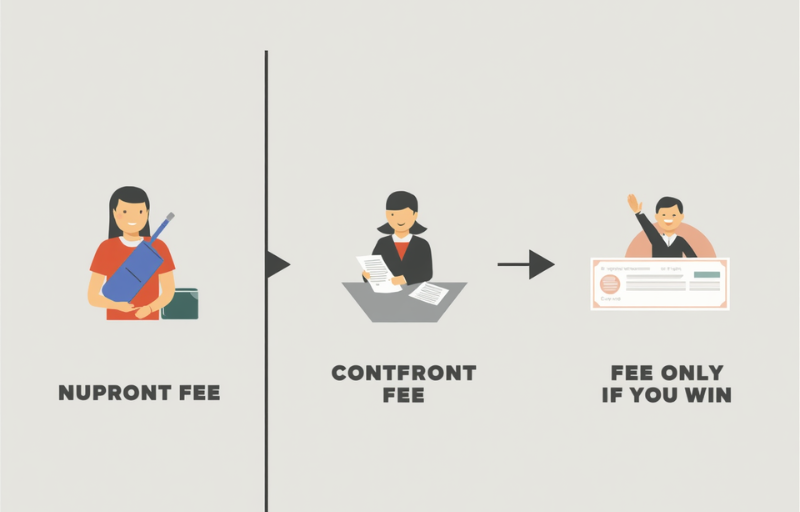
The good news is that most car accident lawyers in the United States do not require any upfront payment. Instead, they work on a contingency fee basis, meaning they only get paid if they successfully recover compensation for you.
However, the total cost of hiring a lawyer depends on several factors, including:
- Whether your case settles or goes to trial
- The complexity of the accident
- Your state’s laws
- The attorney’s experience
- Litigation expenses
- Expert witness costs
This guide explains everything you need to know about attorney fees, settlement deductions, court expenses, and how to determine whether hiring a lawyer is worth it.
Quick Answer
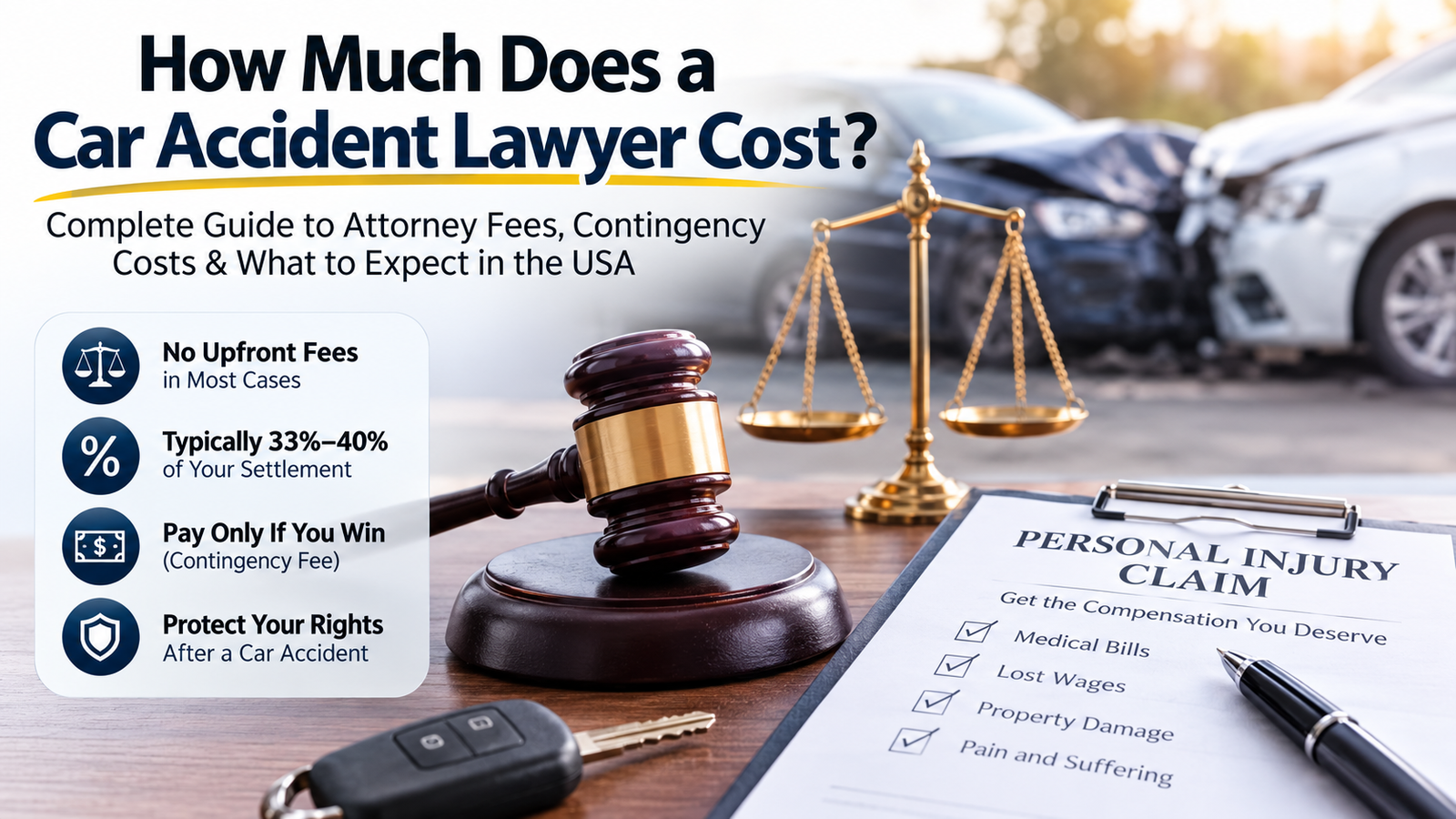
In most personal injury cases, a car accident lawyer charges between 33% and 40% of your settlement or court award.
Typical fee structure:
- Before filing a lawsuit: Around 33⅓%
- After filing a lawsuit: Around 40%
- If you lose the case: Usually no attorney fee (though responsibility for certain case expenses depends on the fee agreement)
This payment model is called a contingency fee agreement, and it allows injured accident victims to pursue legal representation without paying thousands of dollars upfront.

What Is a Contingency Fee?
A contingency fee means the lawyer’s payment depends on the outcome of your case.
Instead of charging an hourly rate, the attorney agrees to represent you and receives a percentage of the money recovered through:
- Insurance settlement
- Negotiated agreement
- Arbitration
- Court verdict
If there is no financial recovery, the attorney generally does not earn an attorney fee. However, some agreements may still require reimbursement of certain litigation costs, so always read the contract carefully.
This arrangement makes legal representation available to people who may not have the financial resources to hire an attorney by the hour.
Why Most Car Accident Lawyers Use Contingency Fees
Car accident claims can take months—or even years—to resolve.
If lawyers required clients to pay hourly legal fees during this time, many accident victims would simply be unable to afford representation.
A contingency fee system benefits both parties.
For clients, it offers:
- No large upfront legal bills
- Access to experienced attorneys
- Reduced financial risk
- Legal help even during financial hardship
For attorneys, it creates an incentive to maximise the value of the case because their compensation depends on the outcome.
Average Car Accident Lawyer Fees in the United States
Although every law firm sets its own pricing, the following ranges are common.
| Case Stage | Typical Attorney Fee |
|---|---|
| Insurance settlement before lawsuit | 25%–33⅓% |
| Lawsuit filed | 33⅓%–40% |
| Trial or appeal | Up to 40% or more, depending on the agreement |
The percentage should always be explained in your written representation agreement before the attorney begins working on your case.
Example of a Contingency Fee
Imagine you were awarded a settlement of $90,000.
If your attorney’s contingency fee is 33⅓%, the attorney fee would be approximately:
- Settlement: $90,000
- Attorney fee (33⅓%): $30,000
- Remaining amount before deducting approved case expenses and medical liens: $60,000
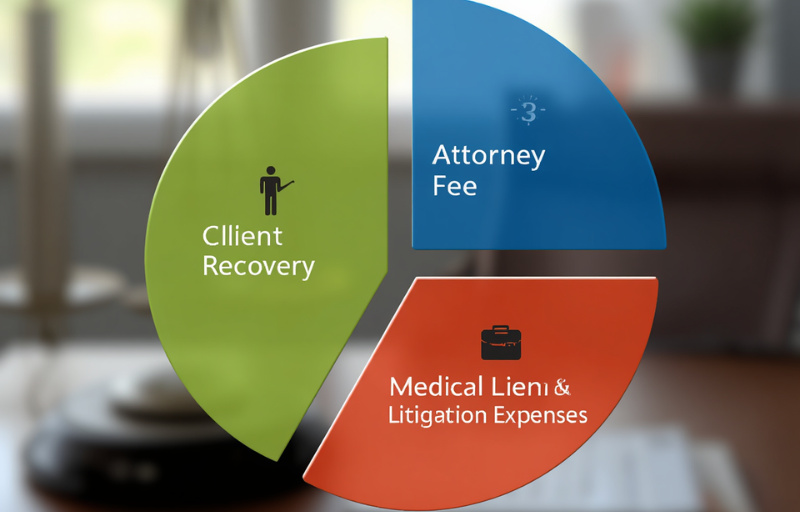
The final amount you receive depends on several deductions, including medical bills, health insurance reimbursements (if applicable), litigation costs, and any negotiated liens.
Do Lawyers Charge Hourly Rates for Car Accident Cases?
In most personal injury cases, no.
Hourly billing is more common in legal areas such as:
- Business litigation
- Divorce
- Real estate disputes
- Contract law
- Employment law
- Intellectual property
Car accident claims are usually handled through contingency fee agreements because payment depends on obtaining compensation.
Can You Hire a Lawyer Without Paying Anything Upfront?
Yes.
Many reputable personal injury law firms offer:
- Free initial consultation
- Free case evaluation
- No upfront attorney fee
- No hourly billing
- Payment only if compensation is recovered
This allows injured individuals to seek legal advice before deciding whether to move forward with a claim.
What Factors Affect Attorney Fees?
Several factors can influence the overall cost of legal representation.
1. Severity of Injuries
Cases involving catastrophic injuries, surgeries, permanent disabilities, or long-term rehabilitation often require more work and resources.
2. Liability Disputes
If the other driver disputes fault, additional investigation may be necessary, increasing the complexity of the case.
3. Insurance Company Cooperation
Some insurance companies negotiate fairly, while others deny liability or make very low settlement offers, requiring more extensive legal work.
4. Litigation
Filing a lawsuit significantly increases the amount of work involved, including:
- Discovery
- Deposits
- Expert witnesses
- Court hearings
- Trial preparation
This is one reason contingency percentages may increase after litigation begins.
Is Hiring a Car Accident Lawyer Worth the Cost?
For many people, the answer is yes, especially when the accident involves:
- Serious injuries
- Permanent disability
- High medical expenses
- Lost wages
- Long-term treatment
- Commercial vehicles
- Multiple parties
- Disputed liability
- Wrongful death
An experienced attorney can help identify recoverable damages, negotiate with insurers, gather evidence, and protect your legal rights throughout the claims process.
Hidden Costs of a Car Accident Lawsuit
While most car accident attorneys work on a contingency fee basis, there are additional case-related expenses that may arise during the legal process. These costs are different from the attorney’s fee and can affect the final amount you receive from your settlement.
Depending on the complexity of your claim, these expenses may include:
- Court filing fees
- Medical record retrieval fees
- Police report fees
- Accident reconstruction experts
- Expert witness testimony
- Deposition costs
- Investigation expenses
- Postage and document preparation
- Court reporter fees
- Trial exhibits
Some law firms pay these expenses as the case progresses and recover them from the settlement at the end. Others may require clients to reimburse certain costs regardless of the outcome. Always ask your attorney how litigation expenses are handled before signing a representation agreement.
Who Pays Court Costs?
Court costs vary depending on the state, the court, and the complexity of the case.
Common court-related expenses include:
- Filing a lawsuit
- Serving legal documents
- Depositions
- Motion hearings
- Certified copies of court records
- Jury-related costs (when applicable)
Many personal injury firms advance these costs so clients do not have to pay them upfront. However, every fee agreement is different, so review it carefully.
Medical Record and Medical Expert Costs
Medical evidence is one of the most important parts of a car accident claim.
Your attorney may need to obtain:
- Emergency room records
- Hospital records
- Surgical reports
- X-rays
- MRI scans
- CT scan reports
- Physical therapy records
- Physician statements
- Future treatment estimates
Healthcare providers often charge fees for copying or providing medical records.
In serious injury cases, attorneys may also hire independent medical experts to explain:
- Permanent injuries
- Future medical treatment
- Disability
- Loss of earning capacity
- Long-term rehabilitation needs
These expert opinions can strengthen your claim but may increase overall case expenses.
Accident Investigation Expenses
Not every accident requires extensive investigation.
However, complicated crashes may involve professional investigators who collect evidence such as:
- Vehicle damage analysis
- Black box data
- Surveillance footage
- Dashcam video
- Traffic camera recordings
- Witness interviews
- Cell phone records (when legally available)
- Road conditions
- Weather reports
These investigations can play a significant role in proving liability, especially when fault is disputed.
Expert Witness Fees
Expert witnesses are commonly used in cases involving severe injuries or disputed liability.
Examples include:
- Accident reconstruction specialists
- Medical specialists
- Economists
- Vocational experts
- Life-care planners
- Engineers
- Biomechanical experts
Their testimony helps explain complex issues to insurance companies, judges, or juries.
Although expert witnesses can increase litigation costs, they may also strengthen high-value claims where significant damages are involved.
Do You Pay Attorney Fees If You Lose?
In many contingency fee agreements, you generally do not owe an attorney fee if your lawyer does not recover compensation for you.
However, treatment of case expenses can differ from one law firm to another.
Some firms absorb these expenses if the case is unsuccessful, while others may require reimbursement for certain out-of-pocket costs. Because practices vary, always ask this question during your initial consultation and review the written agreement carefully.
What Happens After You Receive a Settlement?
Once a settlement is reached, the funds are typically processed before being distributed.
Although the exact process differs from case to case, the settlement often goes through several steps:
- The insurance company issues payment.
- Attorney fees are calculated according to the signed agreement.
- Approved litigation expenses are deducted.
- Medical liens or reimbursement obligations are addressed, if applicable.
- The remaining balance is distributed to the client.
Your attorney should provide a written settlement statement explaining how the funds were allocated.
Example Settlement Breakdown
The following example is for illustration only. Actual amounts vary depending on the facts of each case.
| Item | Amount |
|---|---|
| Total Settlement | $150,000 |
| Attorney Fee (33⅓%) | $50,000 |
| Litigation Expenses | $5,500 |
| Medical Liens/Reimbursements | $22,000 |
| Estimated Client Recovery | $72,500 |
This example demonstrates why it is important to understand both attorney fees and case-related expenses before hiring legal representation.
Can You Negotiate Attorney Fees?
Sometimes, yes.
Some law firms may be willing to discuss their fee structure depending on factors such as:
- The expected value of the claim
- The complexity of the case
- Whether liability is clear
- Whether the case is likely to settle quickly
- The amount of work anticipated
Not every attorney negotiates fees, and choosing a lawyer solely based on the lowest percentage may not be the best decision. Experience, communication, and a proven track record are also important considerations.
Is a Higher Attorney Fee Always Better?
Not necessarily.
An experienced attorney who charges a standard contingency fee may recover significantly more compensation than someone with less experience.
When comparing lawyers, consider factors such as:
- Experience handling similar cases
- Negotiation skills
- Trial experience
- Client communication
- Professional reputation
- Resources available to investigate and prepare your case
The goal should be to find qualified legal representation that matches the needs of your specific situation, rather than focusing only on the fee percentage.
Questions to Ask Before Hiring a Car Accident Lawyer
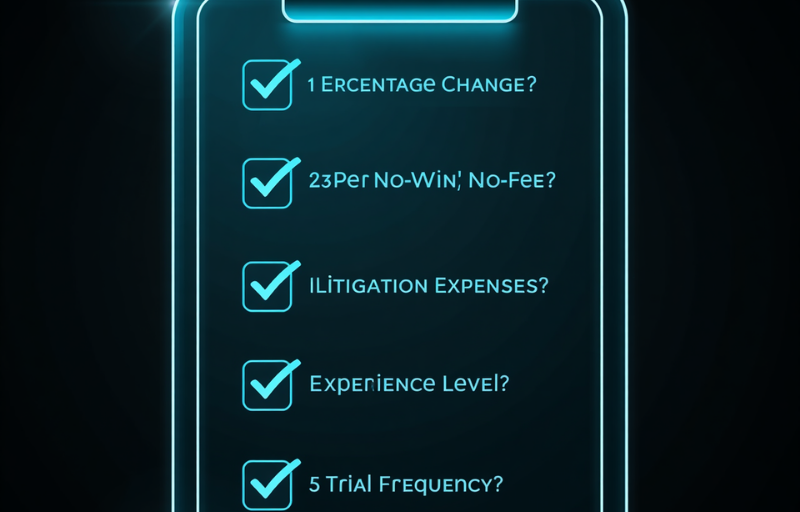
Before signing a representation agreement, consider asking:
- Do you charge a contingency fee?
- What percentage will you charge?
- Does the percentage change if a lawsuit is filed?
- Who pays litigation expenses?
- Will I owe anything if the case is unsuccessful?
- Who will handle my case day-to-day?
- How often will I receive updates?
- Have you handled cases similar to mine?
- Do you regularly take cases to trial if necessary?
These questions can help you better understand the attorney-client relationship and avoid surprises later in the process.
State-by-State Differences in Car Accident Lawyer Fees
Although contingency fees are common throughout the United States, there is no single nationwide attorney fee that applies to every car accident case.
Several factors may influence how fees are structured, including:
- State laws and court rules
- Local legal practices
- Case complexity
- Whether the claim settles before litigation
- The attorney’s experience
- The amount of work required
Some states also regulate certain aspects of attorney-client fee agreements. Because legal requirements vary, always review your written fee agreement carefully and ask your attorney to explain any terms you do not understand.
When You May Not Need a Car Accident Lawyer
Not every accident requires legal representation.
You may be able to handle a claim on your own if:
- No one was injured.
- Property damage is minor.
- Liability is clear and undisputed.
- The insurance company accepts responsibility promptly.
- The settlement offer fairly covers your losses.
However, even seemingly simple claims can become more complicated if injuries worsen, fault is disputed, or the insurer questions the value of your damages.

When Hiring a Lawyer Is Often Recommended
Legal representation may be especially valuable if your accident involves:
- Serious or permanent injuries
- Surgery or long-term rehabilitation
- Significant medical expenses
- Lost income or reduced earning capacity
- Commercial trucks or rideshare vehicles
- Multiple vehicles or multiple injured parties
- Wrongful death
- Uninsured or underinsured motorists
- Disputed liability
- Insurance bad-faith concerns
In these situations, an attorney can help investigate the claim, preserve evidence, negotiate with insurers, and explain your legal options.
How Insurance Companies Evaluate Car Accident Claims
Insurance adjusters generally review many factors when evaluating a claim, including:
- Medical records
- Treatment history
- Property damage
- Police reports
- Witness statements
- Photographs and videos
- Proof of lost wages
- Future medical needs
- Liability evidence
- Applicable insurance policy limits
Every claim is unique. There is no universal settlement formula, and compensation depends on the specific facts, evidence, applicable law, and available insurance coverage.
Common Reasons Insurance Companies Offer Low Settlements
Some insurers may initially offer less than what a claimant believes the case is worth. Reasons can include:
- Disputed liability
- Limited documentation
- Questions about medical treatment
- Pre-existing medical conditions
- Policy limits
- Uncertainty regarding future damages
Before accepting any settlement, make sure you understand what rights you may be giving up. In most cases, accepting a settlement means resolving the claim permanently.
Mistakes That Can Reduce Your Compensation
After a car accident, certain actions can negatively affect your claim.
Common mistakes include:
1. Delaying Medical Treatment
Waiting too long to seek medical care can make it more difficult to document your injuries.
2. Giving Recorded Statements Without Understanding Your Rights
Insurance companies may request recorded statements. Before providing one, understand why it is being requested and consider obtaining legal advice if appropriate.
3. Accepting the First Settlement Offer Too Quickly
Early settlement offers may not fully account for future medical treatment, ongoing pain, or lost earning capacity.
4. Posting Accident Details on Social Media
Photos, comments, or videos posted online may be reviewed during the claims process.
5. Failing to Preserve Evidence
Keep copies of:
- Medical bills
- Repair estimates
- Photographs
- Police reports
- Insurance correspondence
- Receipts related to the accident
Well-organised documentation can help support your claim.
Frequently Asked Questions
How much do most car accident lawyers charge?
Many personal injury lawyers work on a contingency fee basis, often charging around one-third of the recovery, although percentages vary depending on the agreement and the stage of the case.
Do I pay anything upfront?
Many law firms offer free consultations and do not require upfront attorney fees. Review the firm’s fee agreement to understand how litigation expenses are handled.
What if I lose my case?
In many contingency fee arrangements, you do not owe an attorney fee if no compensation is recovered. However, responsibility for certain case expenses depends on the terms of your agreement.
Can I negotiate attorney fees?
Some attorneys may be willing to discuss their fee structure, while others use a standard contingency percentage. It is appropriate to ask about fees during your consultation.
Are attorney fees tax-deductible?
Tax rules depend on your individual circumstances and the nature of the recovery. Consult a qualified tax professional regarding your specific situation.
How long does a car accident claim take?
Some claims settle within a few months, while others—especially those involving litigation or severe injuries—may take significantly longer. The timeline depends on the facts of the case.
Should I accept the insurance company’s first offer?
Not necessarily. Before accepting any settlement, make sure you understand what losses are covered and whether future damages have been considered.
Can I switch lawyers during my case?
In many situations, clients have the right to change attorneys, although doing so may have legal and financial implications. Discuss your options with the attorney involved before making a decision.
Final Thoughts
Hiring a car accident lawyer is often more affordable than many people expect because most personal injury attorneys work on a contingency fee basis. Rather than paying hourly legal fees upfront, clients typically pay attorney fees only if compensation is successfully recovered.
Before hiring an attorney:
- Read the fee agreement carefully.
- Ask questions about litigation expenses.
- Understand how settlement funds will be distributed.
- Compare experience, communication, and reputation—not just the fee percentage.
The right attorney can help you navigate the claims process, protect your legal rights, and pursue fair compensation based on the unique facts of your case.